Things to Do in Tepelenë, Albania: A Local Guide
Tepelenë is a small town in southern Albania where the Vjosa and Drino rivers meet. The top
things to do are drinking from the Uji i Ftohtë cold springs, walking the walls of Ali
Pasha's castle, swimming or rafting in the Vjosa Wild River National Park, hiking the Nivica
canyons, and taking an easy day trip to Gjirokastër, about 35 minutes away.
Most travellers drive straight through Tepelenë on the way from Tirana to Gjirokastër or
Sarandë. That is a mistake. Within half an hour of town you have a castle where Lord Byron
met Ali Pasha, springs that stay ice-cold in August, Europe's first national park built
around a wild river, and canyons that see a fraction of the visitors of the coast. We live
and work here, at the springs, so this guide is the list we give our own guests.
Where is Tepelenë?
Tepelenë is in Gjirokastër County, in the south of Albania. The town stands on a plateau above the point where the Drino flows into the Vjosa. The main north-south road, the SH4 (Fier - Tepelenë - Gjirokastër - Greek border at Kakavijë), runs through it, which is why it is the natural halfway stop on any road trip to the south.
.JPG)
Distances and Travel Time
| Destination | Distance | Drive time |
|---|---|---|
| Qendra e Tepelenës | 8 km | 10 min |
| Pazari i Vjetër, Gjirokastër | 25 km | 25-30 min |
| Përmet / Bënja | 50 km / 60 km | 1 h / 1 h 15 min |
| Syri i Kaltër | 65 km | 1 h 10 min |
| Sarandë | 80 km | 1 h 30 min |
| Vlorë | 85 km | 1 h 30 min |
| Aeroporti i Janinës (Greqi) | 104 km | 1 h 45 min |
| Tiranë | 210 km | 3 h |
Top 12 activities in Tepelenë
1. Drink from the Uji i Ftohtë cold springs
The name means "cold water", and it is exactly that: clear mountain
springs that come out of the left slope of the Drino valley and stay cold all year
round. The site covers about 1.5 hectares of oak and hawthorn and was declared a
Natural Monument in 2020. Local tradition says the springs have been used for more
than 250 years and links them to Ali Pasha.
It is the classic lunch stop on the Tirana - Gjirokastër road: fill a bottle, sit in
the shade and eat by the water. In July and August, when the valley is hot, this is
the coolest place for miles. Our hotel and restaurant are right here, so you can
turn a quick stop into a slow lunch or an overnight stay.
Tip: there are two places in Albania called Uji i Ftohtë. This one is in Tepelenë,
on the SH4. The other is a seaside neighbourhood of Vlorë, about 1 h 30 away.
2. Walk the walls of Tepelenë Castle
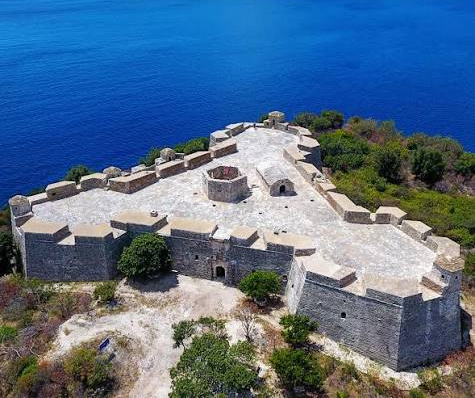
On the edge of the plateau, about 300 metres above the river, stand
the walls of Tepelenë Castle. A Byzantine fort stood here first; the Ottomans built
on it, and in the early 19th century Ali Pasha Tepelena, the Albanian-born ruler who
controlled much of Epirus, rebuilt it into a fortress of about 4 hectares. An
inscription over the Vizier Gate dates the expansion to 1819. It was still
unfinished when he died in 1822.
Today you can walk around walls that reach about 10 metres in places, see three
polygonal towers, two gates and the stump of a minaret, and look down on the meeting
of the two rivers. People still live inside the walls, so treat it as a
neighbourhood as well as a monument. Entry is free.
3. Follow Lord Byron to Ali Pasha
In 1809 the young Lord Byron rode to Tepelenë to meet Ali Pasha and described the visit in Childe Harold's Pilgrimage, which made the town known across Europe. The square in the centre is named after him, and a monument to Ali Pasha stands near the castle entrance. Add the Tepelenë History Museum, which covers the region from Ali Pasha's time to the communist period, and you have a good two-hour walk.
4. Explore the Vjosa Wild River National Park
The Vjosa is one of the last large free-flowing rivers in Europe:
about 272 km long, it rises in the Pindus mountains of Greece (where it is called
the Aoös) and runs about 192 km through Albania to the Adriatic, without a single
dam. In March 2023 Albania declared it Europe's first Wild River
National Park,
protecting 12,727 hectares of the river and its tributaries Drino, Bënça, Shushica
and Kardhiq. More than 1,100 animal species live in the system.
Tepelenë sits in the middle of the park. The easiest ways in: walk the gravel banks
below the town at the confluence, swim at a calm bend in summer, or watch birds
along the braided channels in spring and autumn. For more on the river itself, read
our Vjosa
River guide.
5. Go rafting or kayaking on the Vjosa and Bënça
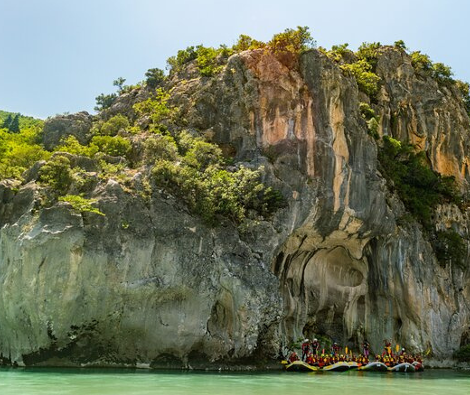
Rafting is the most popular activity in the area. Trips usually run on the Vjosa between Përmet and Tepelenë, through the Këlcyrë gorge, or on the smaller Bënça. Local operators supply boats, helmets and guides; no experience is needed for the standard routes. Water levels are highest in spring, when trips are livelier; in summer they are gentler and family-friendly. Our reception can book a trip for you.
6. Swim in the Bënça and see Ali Pasha's aqueduct
Just outside town, where it joins the Vjosa, the Bënça river comes out of a narrow valley full of clear, green pools. It is the best natural swimming in the area and much quieter than the coast. On the way you pass the Bënça aqueduct, a stone water channel attributed to Ali Pasha, which once carried water towards the castle.
7. Hike the Nivica canyons and see the Peshtura waterfall
South-west of Tepelenë rise the Kurvelesh highlands, a region of stone villages and deep limestone gorges. The Nivica canyons are among the most impressive in Albania, and the Peshtura (Progonat) waterfall drops into a pool you can swim in. Roads are narrow and partly unpaved, so a local guide or a 4×4 helps. Plan a full day.
8. Visit Lekli Castle
Just above the Drino valley, a few minutes from the springs, are the ruins of Lekli Castle, one of the sites listed by the Vjosa National Park. It is a short, quiet visit with wide views over the valley, ideal late in the afternoon.
9. Soak in the Bënja thermal baths near Përmet
About an hour east, near Përmet, the Bënja thermal baths are natural warm pools (roughly 26-32 °C) next to the Lengarica canyon and an Ottoman stone bridge. Combine them with lunch in Përmet, known for its local wine, raki and preserves.
10. Take a day trip to Gjirokastër
The UNESCO-listed "stone city" of Gjirokastër is about 25-30 minutes from the springs. Spend the morning at the castle and the old bazaar, then come back to the quiet valley for dinner. Many guests prefer this to staying in the old town: it is cooler, easier to park and closer to the rivers.
11. Remember the Tepelenë internment camp
Tepelenë also has a hard history. In the early communist years a forced internment camp here held whole families, many of them children and elderly people, in brutal conditions. A memorial marks the site. It is a sober but important stop for anyone interested in modern Albanian history.
12. Eat like the south: Labëria cooking
Tepelenë is part of Labëria, the region whose food is built on lamb and goat, fresh white cheese, wild herbs, honey and thick yoghurt. Look for slow-roasted lamb, pies (byrek and petanik) and whatever is in season. At our restaurant by the springs we cook southern Albanian dishes with local produce, and the bar by the water is where most road-trippers end up for coffee
Suggested itineraries
One day in Tepelenë
- Morning:Tepelenë Castle, Lord Byron Square and the History Museum
- Midday: Lunch at the Uji i Ftohtë springs
- Afternoon: Walk the Vjosa banks at the confluence
- Evening: Dinner by the springs and an early night
Two or three days
- Day 1: the one-day plan above.
- Day 2: rafting on the Vjosa in the morning, Bënja thermal baths and Përmet in the afternoon.
- Day 3: Gjirokastër in the morning, Lekli Castle on the way back, or a full day in the Nivica canyons instead.
Best time to visit Tepelenë
May-June and September-October are ideal: warm days, cool nights, good river levels and comfortable hiking. July-August are hot (often above 35 °C in the valley), which is when the cold springs and river swimming are at their best. Winter is quiet and green, good for food and history rather than water.